It is a production line for welded aluminium double-glazing profile. The production line is made up from a double decoiler, followed by a roll forming line PME 35 with 11 forming stations and 300 mm useful width, then we have a high frequency welding unit, beyond a cooling unit, then a flying shear, and to finish the unloading bench. As an option it is possible to have a boiler with rapid vaporization to wash the profile.
PRODUCTION LINE FOR DOUBLE-GLAZING PROFILE

Technical data
| Decoiler capacity: | 1+1 ton |
|---|---|
| Coils maximum internal diameter: | 500 mm |
| Maximum width: | 100 mm |
| Material: | Aluminium |
| Sheet maximum thickness: | 0,2 mm |
| Profiles maximum length: | 7 m |
| Maximum roll forming speed: | 100 m/min |
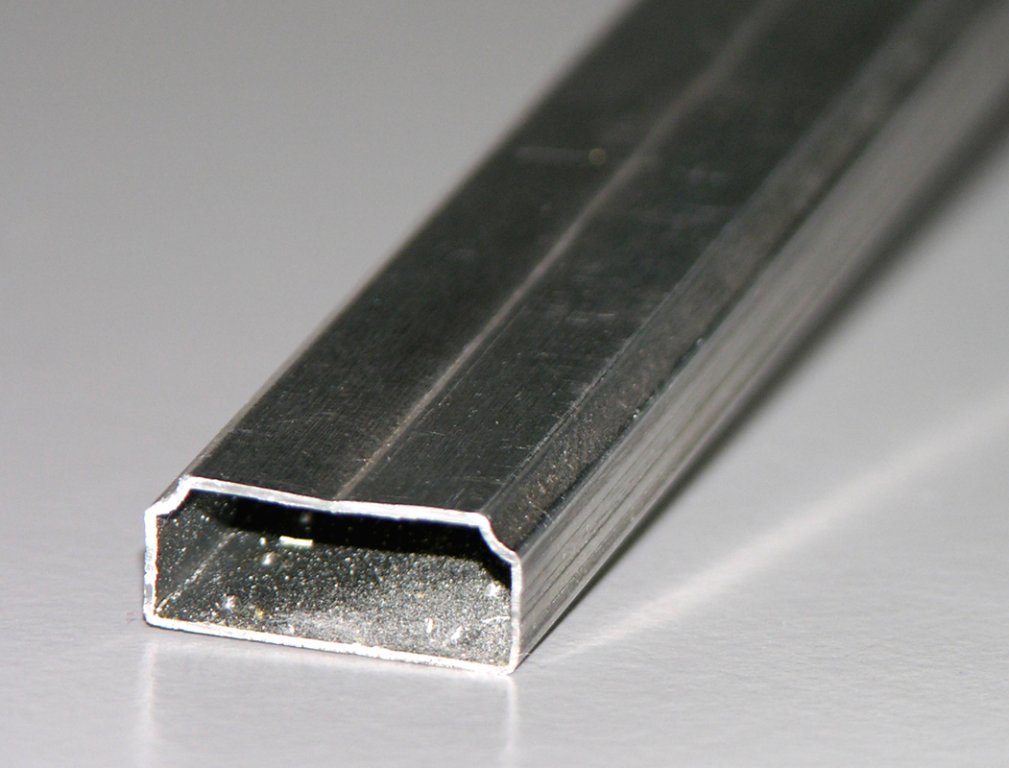
Machine configuration
Technical data
| Decoiler capacity | 2+2 ton |
|---|---|
| Shaft diameter (min/max) | 470/530 mm |
| Coil maximum external diameter | 1800 mm |
| Motorized AC decoiler with inverter | 1,5 kW |
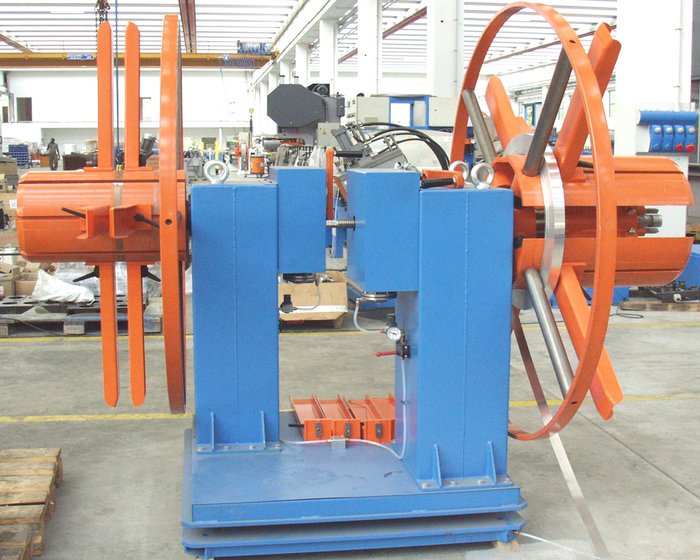
Two motorised decoilers (or idle on request) with 2 ton capacity. Their base is pivoting; therefore the stopping time to insert the coil is extremely reduced. Complete with independent hydraulic unit and electric plant. Unit for the mandrel regulation, electric plant for the automatic / manual mode and for the speed regulation. Complete with loop, arm for loop control and spokes to keep the strip in the correct position.
Technical data
| Roll forming line shaft Ø | 50 mm |
|---|---|
| Useful width roll forming line | 500 mm |
| Passages of roll forming line | 18 n° |
| Material thickness | 0,1 / 1,5 mm |
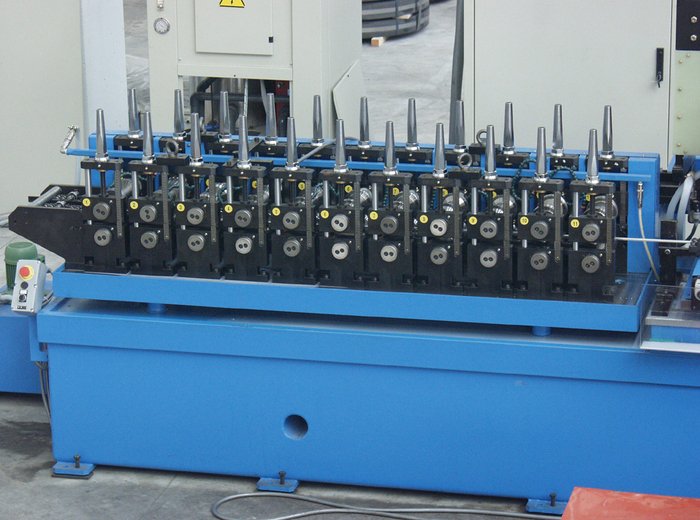
Roll forming line of high quality, productivity and flexibility. It is characterized by the rapid change of cassettes (it is possible to change the product in a few hours) and materials and finishing rigorously controlled to guarantee for the client more production and less maintenance. It could be completed with sheet lubrication plant, strip introducer and independent regulations for each forming station.
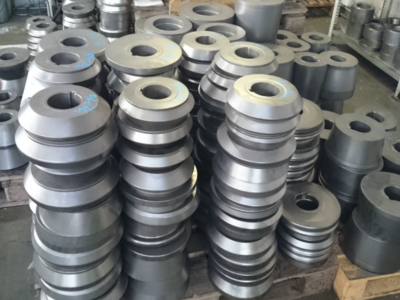
It is a set of forming rolls, made of tempered and rectified steel to make the profile requested by the client. The series of rolls is characterized by high precision and durability. Their function is at the heart of the whole plant; for this reason PM follows with particular precision the whole development (the whole process of roll-making is executed internally).
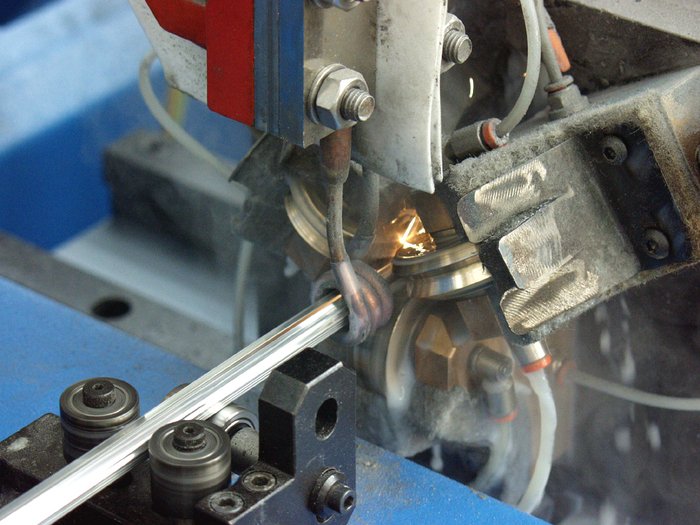
It carries out the in-line welding of the profile.This welding consists in joining the edges of the preformed strip, carried out by means of a AC (HF) generator which through a coil induces a high intensity electric current which leads to fusion of the edges of the strip that are pressed, with the result of the welding.
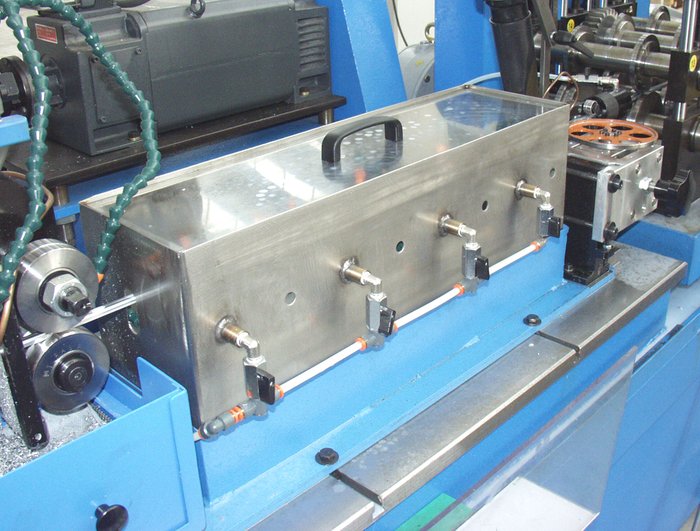
Plant to cool the just welded tube. It is placed after the welding zone and is made up of a welded structure on which a tank is positioned. Inside this tank there are nozzles which spray the cooling liquid on the tube.
It is installed in the final part of the line, generally immediately after the roll forming line. It has to regulate the profile in a precise manner and to allow eventual modifications when changing the type of sheet. It is made up of a completely metallic structure on which the straightening rolls are installed.
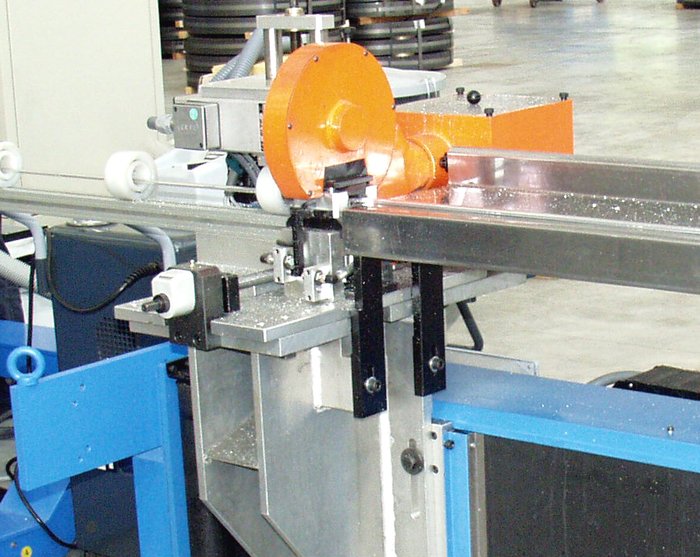
It is in the final part of the line and carries out the flying cut to measure (the roll forming line does not stop). The movement is through an electric motor. It includes the final cutting saw which guarantees an extremely precise shear without product deformation. This solution increases considerably the productivity
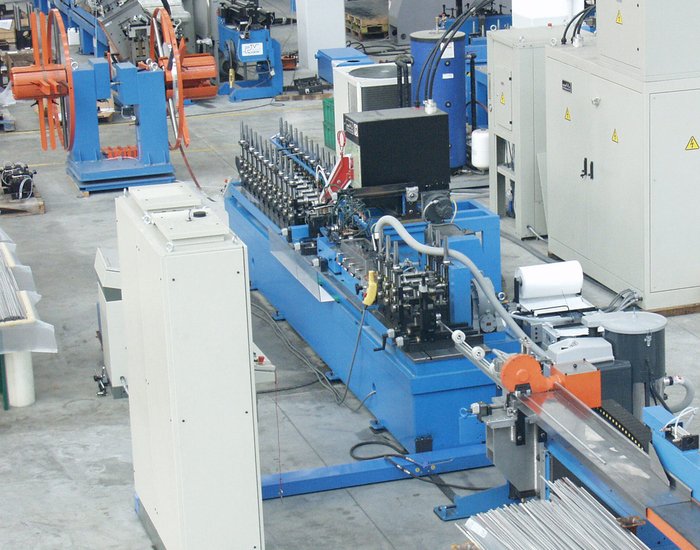
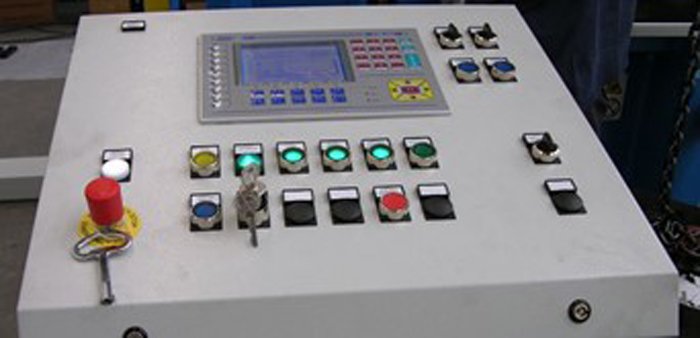
The whole electric installation is intended here. Electric cabinet, cable channels, control desk and software for the management of the line parameters, all according to the highest standards of quality and efficiency.
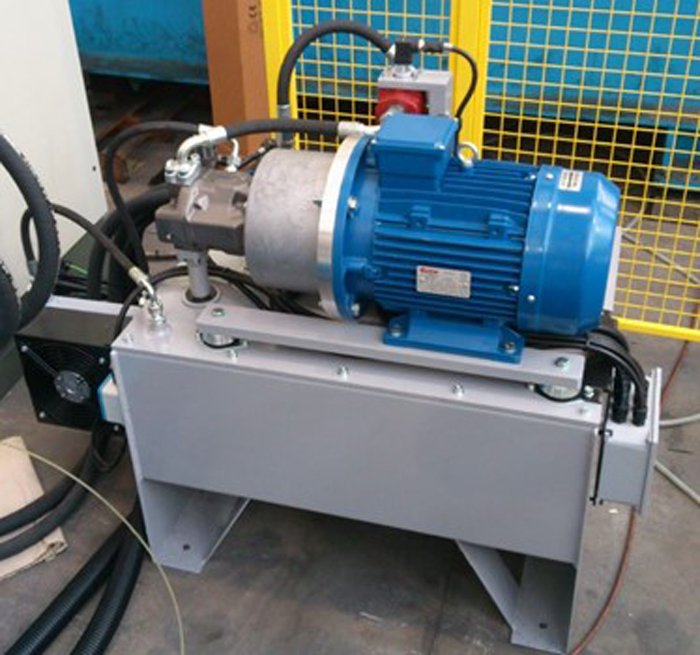
L'impianto idraulico è necessario nelle operazioni di taglio e nelle unità idrauliche di punzonatura o scantonatura. È composto dalla centralina (di potenza tale da soddisfare tutte le lavorazioni), dai collegamenti meccanici (tubature e valvole) e dal software di controllo e gestione.
Series of wire mesh, infrared photocells and sensors for the protection of the operators. They are installed on the line to avoid any accident that could cause physical damages to the operators